
The short answer
Hurricane season on Maui runs from June 1 to November 30, and the state says the peak is historically August and September. The Central Pacific Hurricane Center adds that tropical cyclones "can and do occur year round." Before a storm, the state's advice for the yard is to bring in anything the wind could move and remove dead or weak tree limbs.
We're Hawaii Hauling, two brothers born and raised in Lahaina, hauling junk and yard debris on Maui since 2024. We aren't forecasters or tree trimmers. Every date and safety rule below is quoted from the agency that owns it, with the link beside it, checked on 10 November 2026.
Hurricane season on Maui at a glance
| The question | The official answer |
|---|---|
| The dates | "officially begins on June 1 and ends on November 30" (Central Pacific Hurricane Center) |
| The peak | "historically being in August and September" (Hawaiʻi Emergency Management Agency) |
| Off season | Tropical cyclones "can and do occur year round" (Central Pacific Hurricane Center) |
| The warning | A hurricane watch comes about 48 hours before strong winds (National Weather Service) |
| Supplies | Two weeks of water, food and medicine (Hawaiʻi Emergency Management Agency) |
When is hurricane season on Maui?
Hurricane season on Maui is June 1 to November 30. The federal forecasters in Honolulu put it this way: "The hurricane season in the Pacific officially begins on June 1 and ends on November 30, however tropical cyclones can and do occur year round" (Central Pacific Hurricane Center). The state and the county both say "June through November".
The peak is August and September, per the state (Hawaiʻi Emergency Management Agency). A normal season has four or five tropical cyclones in the whole central Pacific, and that count isn't a forecast of how many reach land (National Weather Service).
Then there's the idea that Haleakalā has our back. The county's own page takes that one apart: next to a hurricane, "the mountains are roughly equivalent to a speed bump" (Maui County). I've leaned on that mountain for a lot of things. Storm protection is off the list.
The county's line for the whole subject is the calm one to keep: "It is not an issue of if a hurricane will impact Maui County, but simply a matter of when one will occur."
How often do storms actually reach Maui?
Not every year, but 2026 was an active one. Forecasters called for an above-normal season, with 5 to 13 tropical cyclones in the central Pacific (National Weather Service). Two of them left a mark on Maui. The third row is the 2018 storm that made landfall here.
| Storm | What it did on Maui |
|---|---|
| Lala 15 August 2026 | "gusts of 85 mph in Olowalu", and Upcountry "was hit with many large, downed trees that toppled power lines" (County of Maui) |
| Lowell 8 September 2026 | Passed offshore. Coastal flooding closed Honoapiʻilani Highway and the Olowalu drop-off for a day (County of Maui) |
| Olivia 12 September 2018 | Made landfall northwest of Kahului. "numerous trees were downed" and 4,500 customers in Makawao lost power (National Hurricane Center) |
Two of the three rows are about downed trees. That's the part of a storm a yard can do something about ahead of time.
And the wind doesn't check the calendar. The kona storms of March 2026 were outside the season entirely, and they left enough on the ground that the county put out its own debris removal instructions. So think of this as wind prep. Hurricane season is just when the wind has a name.
What to clear from the yard before a storm
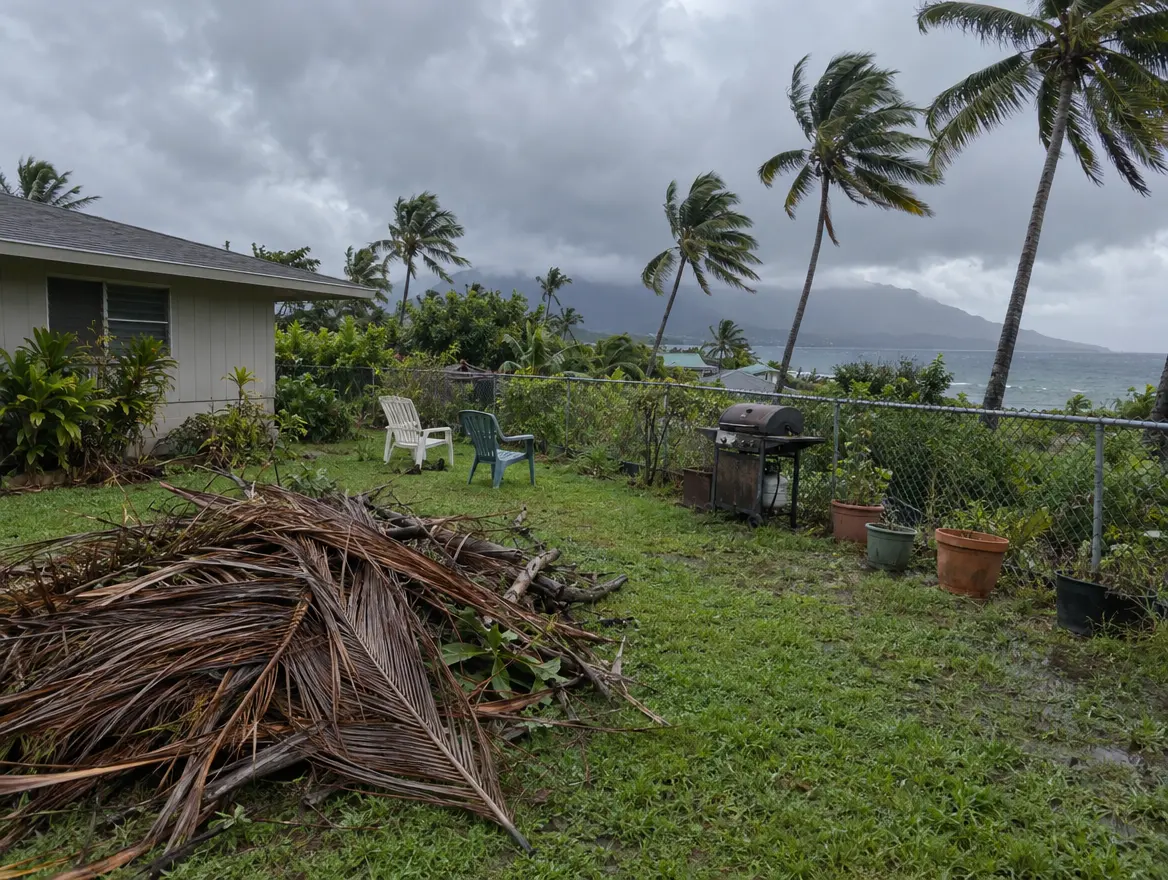
The state's list for the yard is two lines long. Before a storm, it says to be "bringing outdoor furniture, trash cans, decorations or anything that could be blown around by hurricane winds" and "removing dead or weak tree limbs or branches that could be blown down" (Hawaiʻi Emergency Management Agency).
The National Weather Service adds a good habit: "Make a list of items outside your home you will need to tie down or put away so that they don't blow away or fly through a window" (National Weather Service). Here's that list for a Maui yard. The list is ours. Only the words in quote marks are the agencies'.
| In the yard | What to do |
|---|---|
| Dead and weak limbs | Cut them in a calm month and haul them. Dead fronds and the branch you've been eyeing since last year both count. |
| Things that fly | Chairs, the grill, pots, trash carts, the kids' stuff. Inside, or tied down. |
| Junk that should've gone | The old couch on the lanai, loose roofing, scrap wood by the fence. It only gets heavier wet. |
| Gutters and drains | The state says clear them "to ensure water flow from heavy rain". |
The third row is the one people skip. The state's page names "outdoor furniture" in its list of "dangerous projectile debris", and a broken lounge chair is still furniture. If it's been waiting since 2022, a dry week is the time.
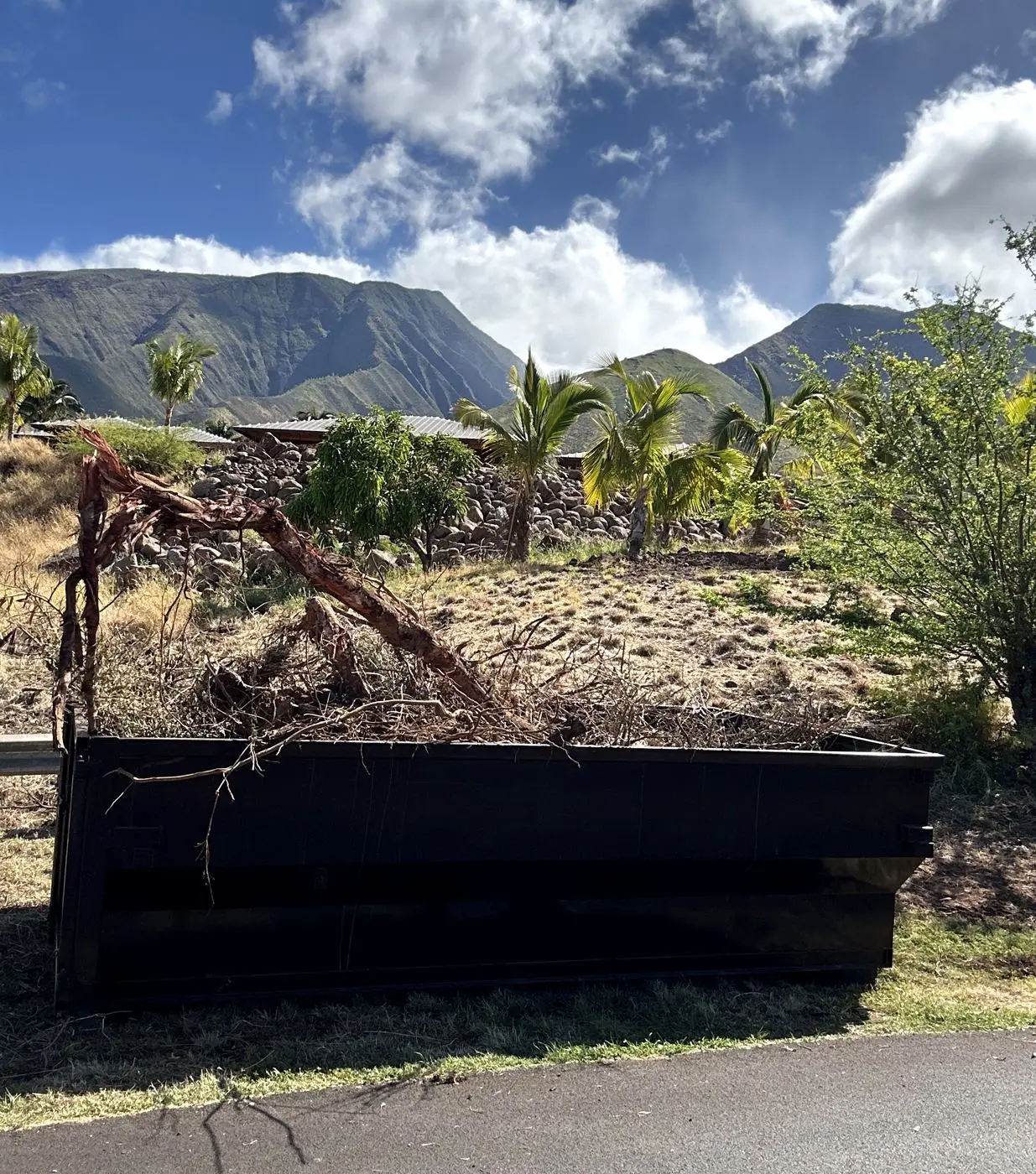
How strong does the wind have to be? At hurricane strength, the federal scale says "large branches of trees will snap and shallowly rooted trees may be toppled" (National Hurricane Center). None of the official pages we read gives a wind speed for when a lawn chair leaves. I'd treat that as a reason not to run the experiment.
Why "the days before a storm" is too late on Maui
Official advice files yard work under last-minute prep, and on Maui the last minute is a bad time to haul. A hurricane watch goes out about 48 hours ahead because "it may not be safe to prepare for a hurricane once winds reach tropical storm force" (National Weather Service). Two days sounds like plenty until you count what can go wrong.
| The snag | Why it bites |
|---|---|
| Sundays | The green waste yards are closed every Sunday (Maui County) |
| Road closed | Olowalu shut for a day in September 2026 when the highway flooded (County of Maui) |
| Wind | County landfills on Molokaʻi and Lānaʻi closed on 15 August 2026 "due to high winds causing unsafe operating conditions" (County of Maui) |
The county has said the quiet part itself. On 18 March 2026, with a kona storm on the way, it asked residents "to remove clean, vegetative debris and other green waste from their properties by taking it to green waste collections locations" (County of Maui). Before the storm, not after.
So the honest plan is boring. Pick a dry weekend in spring, walk the yard, and get the dead stuff gone. The storm prep that works is the kind you finish while the forecast is still showing sunshine and the guy next door is wondering why you're working so hard.
Trees near power lines are not a weekend job
Anything touching or close to a power line belongs to a certified tree trimmer and Hawaiian Electric, not to you and not to us. The utility's wording: "Only professionally trained and certified individuals should trim trees that are touching or in close proximity to power lines" (Hawaiian Electric). It asks you to call before any work near overhead lines, and it can lower your service line for the trimmer.
| The situation | Who to call |
|---|---|
| A tree growing into the line to your house | Hawaiian Electric, 1-855-304-8181, then a certified trimmer (Hawaiian Electric) |
| A line on the ground | The same number, any hour. Stay "at least 30 feet or more" away. 911 if someone's hurt (Hawaiian Electric) |
| A tree across a county road | The county Highways Division main line, (808) 270-7869. District offices are on the same page (Maui County) |
The utility also says to "always assume downed power lines are energized and dangerous". That's the one sentence in this post I'd tape to the fridge. No branch is worth finding out.
After the storm: where the debris goes on Maui
After a storm, branches go to a green waste yard and everything else goes to the landfill, and the county expects most people to haul their own. Its release after the March 2026 storms says so: "The County encourages self-hauling when possible" (County of Maui). The same release adds, "The County will not be entering private property to remove debris."
| Where | Hours | Resident cost |
|---|---|---|
| Central Maui Landfill green waste yard, Puʻunēnē | Monday to Saturday, 6am to 3pm (Maui County) | Free |
| Olowalu, 3 miles south of Lahaina | Monday to Saturday, 8am to 2:30pm (Maui County) | Free |
| Hawaii Organics Compost, Waikapū | Weekdays 6am to 4pm, Saturday 7am to 2pm (Hawaii Organics) | $10 a load, with a $10 compost credit |
The county's cut rule for green waste: "less than 8 feet in length and 3 feet in diameter", and "free of rocks, mud or any trash" (County of Maui). Piles stay off roads and sidewalks. Our Maui green waste guide has every yard and its rules.
The mixed pile is the real work. A storm doesn't sort. The Waikapū yard's own list turns away furniture, plywood, painted or treated lumber and metal (Hawaii Organics). So the branches go to a green waste yard, and the fence panel and the chair that blew in from two houses over go to the landfill.
The county has helped after the big ones. After Lala it offered 30-yard bins for green waste, first come, first served, at (808) 270-7631 (Maui News, August 2026). After the March storms, curb pickup was for "kūpuna or others physically unable to self-haul debris", through an online storm debris report to the Maui Emergency Management Agency, with 808-270-7285 for help with the form. Treat both as storm-by-storm help, not a standing service.
The supply kit, in one paragraph
Hawaii's number is two weeks, not three days. The state's reason is the ocean: Hawaii "relies on shipping for most of its food and supplies", so people "need to stock up with two weeks of emergency supplies in case a disaster like a hurricane or tsunami damages ports" (Hawaiʻi Emergency Management Agency). For water, that's "14 gallons of water per person in your home".
For alerts, the county's free system is MEMA Alerts: "Simply text: Mauialerts to 38276" (Maui County). That's the kit. The state's page covers the roof, the windows and the insurance, and it's better at those than a hauling company will ever be.
What we haul, and what we leave to the tree guys
Storm prep and storm cleanup both end in a pile, and the pile is our part. Here's where our job starts and stops.
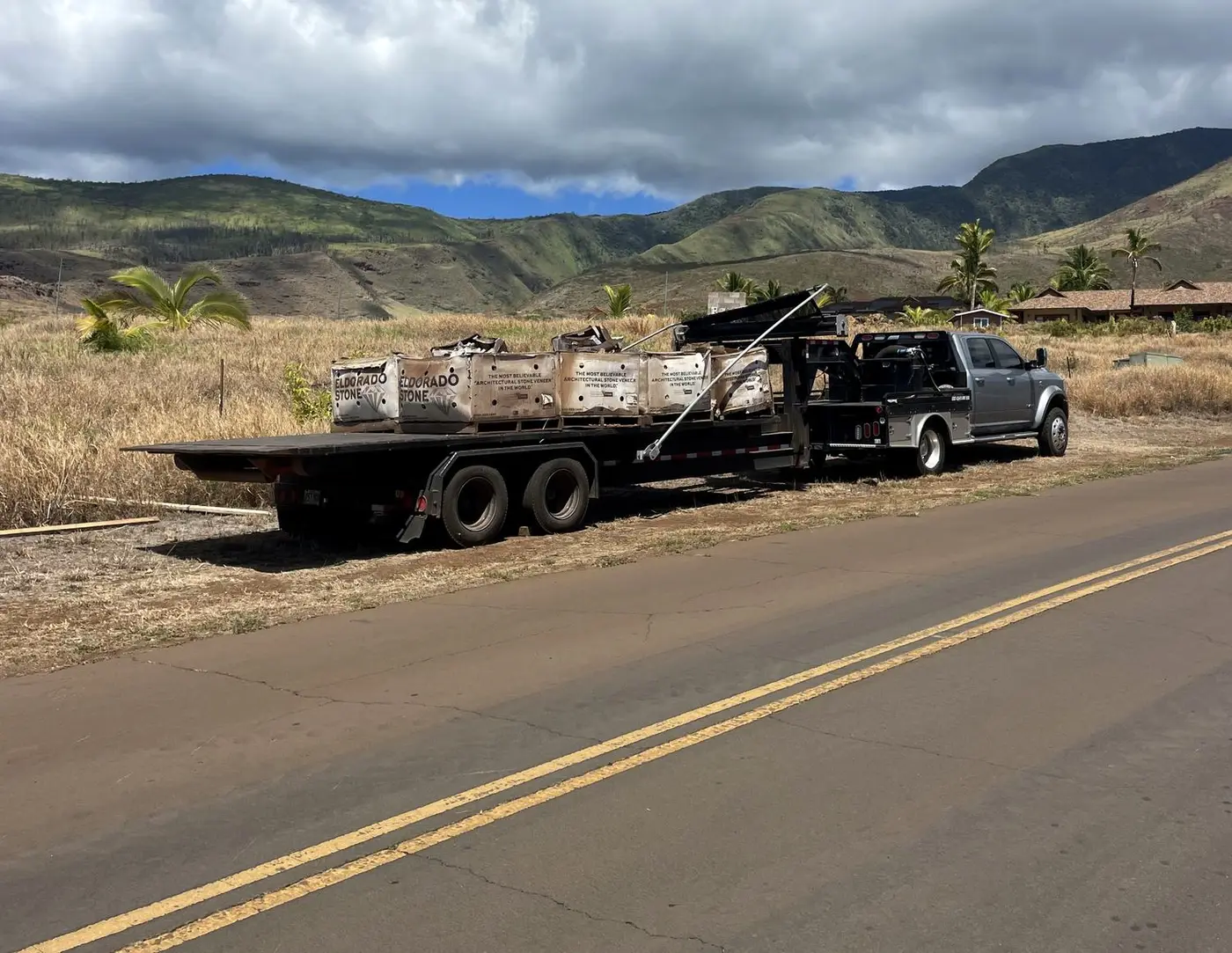
- We haul what's on the ground or already cut. We don't climb, trim or cut. Anything near a line is Hawaiian Electric's call. The tree guy brings the saw, and we bring the truck for what he leaves.
- We sort the mixed pile. Branches go to the green waste yard and the rest goes to the landfill. You'd need two or three stops to do that yourself, and we make them on the way.
- The loose junk can go any week. The couch on the lanai and the scrap by the fence are a normal junk removal job. I'd rather take them in a dry week than chase them down the street in a wet one.
- The price comes first. Small loads start at $300. A whole fallen tree, or a yard that got away from you, is quoted from a photo and confirmed before we load.
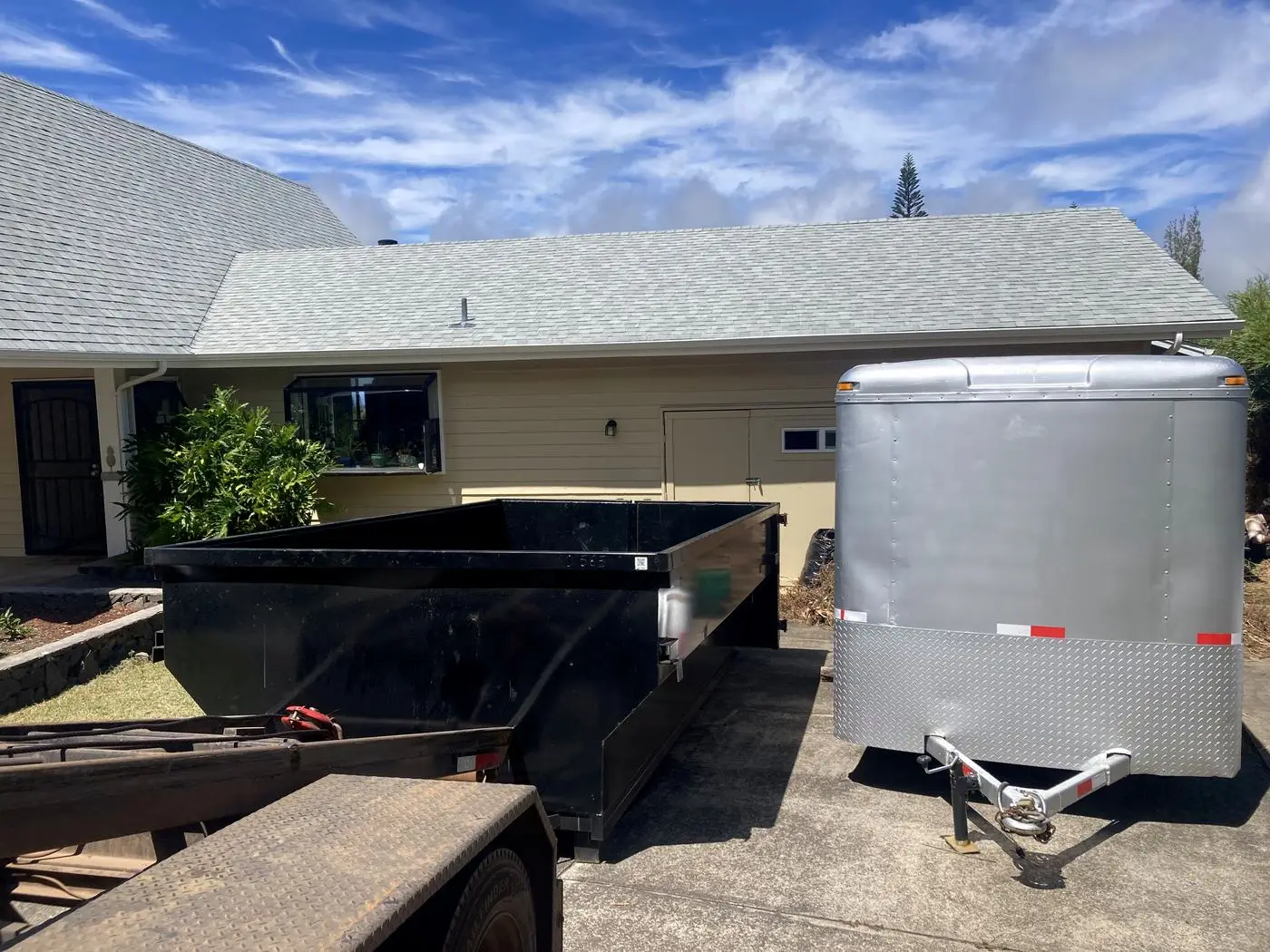
A project that fills up over a week can go in a bin in the driveway: $950, plus the landfill tonnage at cost. Free estimate from a photo. Text it to (808) 359-8130.
Hurricane season on Maui questions
Straight answers. Something missing? Call us.
When is hurricane season on Maui?
Hurricane season on Maui and across Hawaii runs from June 1 to November 30. The state's emergency agency says the peak is historically August and September. The Central Pacific Hurricane Center notes that tropical cyclones can occur in any month.
Does Maui get hurricanes?
Storms do reach Maui. Tropical Storm Olivia made landfall northwest of Kahului on 12 September 2018, and in August 2026 the county reported gusts of 85 mph at Olowalu from Lala. The county's own page says it's a matter of when, not if.
What should I do with my yard before a hurricane?
The state's advice is to bring in outdoor furniture, trash cans and anything else the wind could move, remove dead or weak tree limbs, and clear gutters and drains. Trees near power lines need a certified trimmer and a call to Hawaiian Electric first.
Where do I take branches after a storm on Maui?
Residents can take green waste to the yard at the Central Maui Landfill or to Olowalu for free, or to Hawaii Organics Compost in Waikapū for $10 a load. Cut it under 8 feet long and 3 feet across, with no rocks, mud or trash mixed in.
Will Maui County pick up storm debris from my house?
Not as a standing service. After the March 2026 storms the county arranged pickup only for kūpuna and people physically unable to haul, and said it wouldn't enter private property to remove debris. It has offered green waste bins after big storms at (808) 270-7631.
Who do I call about a tree on a power line on Maui?
Call Hawaiian Electric's trouble line for Maui County at 1-855-304-8181, any hour, and stay at least 30 feet away. Call 911 if someone is hurt. Don't cut or move anything that's touching a line.
Got a pile, before the wind or after it?
Text a photo of the pile and we'll text you a price. We load it, sort the branches from the junk, and haul it, the same day when you need it. Small loads from $300. How our yard debris removal works, or call (808) 359-8130.
Read this next: Maui green waste: where to take it, hours and rules