
The short answer
Swedish death cleaning is clearing out your own home slowly, while you're well, so your family doesn't have to do it later. You start with storage and leave photos and letters for last. On Maui, books go to the Friends of the Library, clothes and dishes to Goodwill, good furniture to the Habitat ReStore, and the rest to the landfill.
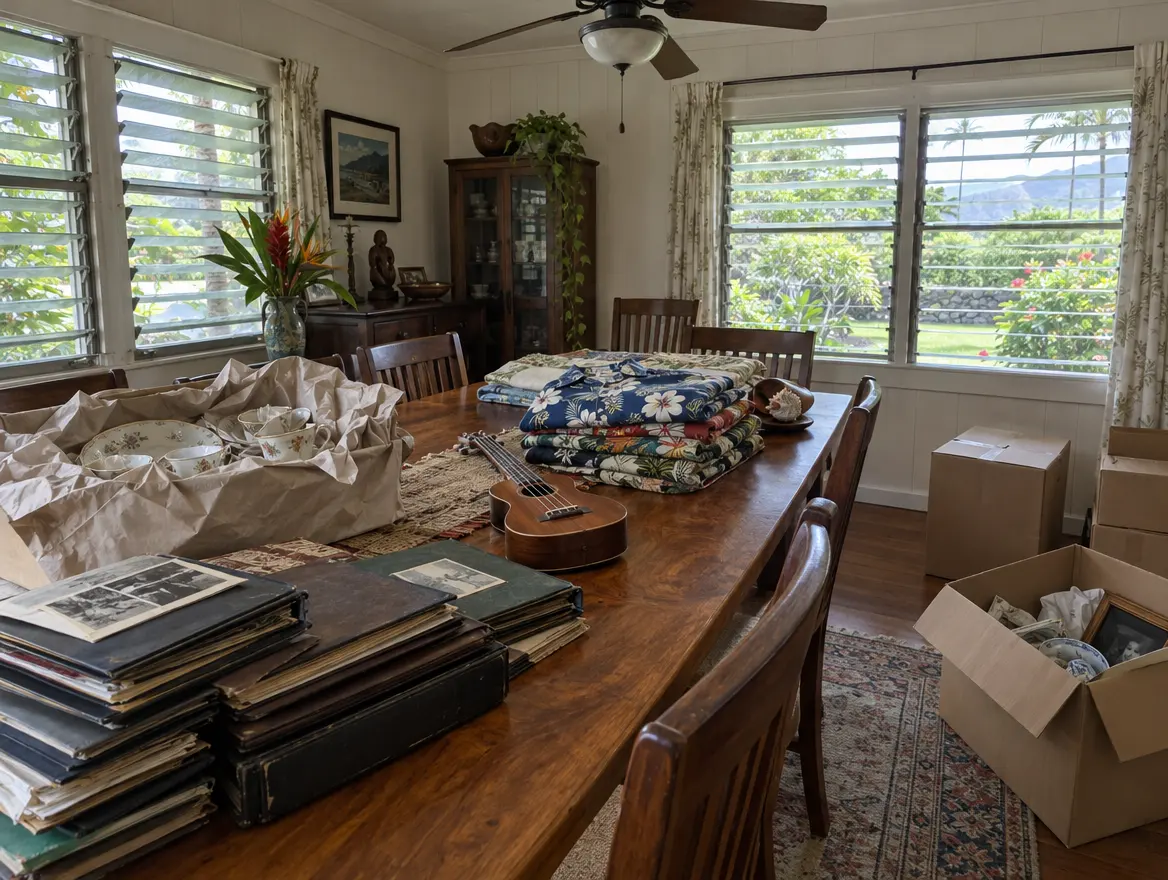
We're Hawaii Hauling, two brothers born and raised in Lahaina, hauling junk on Maui since 2024. We're the last step of this job, never the first. The method below comes from the book and its author's own words. Every Maui place, fee and hour comes from that place's own page or the source linked beside it, checked on 14 November 2026.
Where a lifetime of things goes on Maui
| What | Where it goes | Cost |
|---|---|---|
| Books | Maui Friends of the Library stores in Kahului, Kīhei and Puʻunēnē (MFOL) | Free |
| Clothes, dishes, linens | Goodwill drop-offs in Kahului and Kīhei, 9am to 5pm daily (Goodwill Hawaii) | Free |
| Good furniture, tools | Habitat ReStore in Wailuku. Curbside pickup or drop-off, both by appointment (Habitat Maui) | $10 pickup |
| Old medicine | The drop box at the Wailuku, Kīhei, Lahaina or Hāna police station (Hawaii Department of Health) | No fee listed |
| What nobody takes | Central Maui Landfill, Monday to Saturday, 6am to 3pm (Maui County) | $5 a load |
What is Swedish death cleaning?
Swedish death cleaning is sorting and giving away your own things while you're still here to do it. The Swedish word is döstädning. Dö means death and städning means cleaning (Scribner). It comes from Margareta Magnusson's 2018 book, The Gentle Art of Swedish Death Cleaning.
The name sounds like a job for a guy in a hazmat suit. It's really a grandma with a roll of masking tape and strong opinions about who gets the good pot.
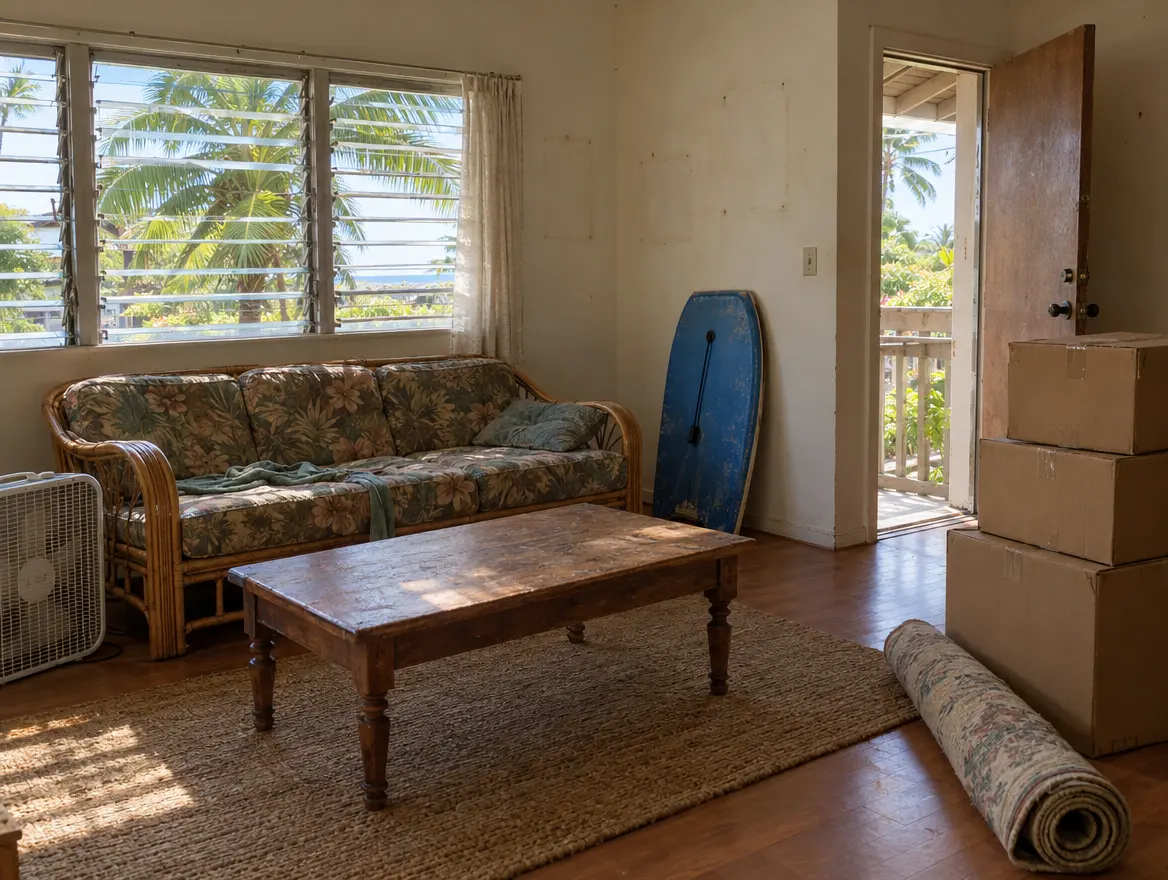
Her whole reason fits in one line of the book: "No matter how much they love you, don't leave this burden to them" (her excerpt in Time). Somebody clears every house in the end. Either it's you, slowly, with the stories attached, or it's your kids on a long weekend with the stories gone.
Two things people get wrong. It isn't scrubbing, and it isn't only for the very old. The publisher's own page says you can do it at any age, and that sooner beats later (Scribner). Magnusson died in March 2026 (The New York Times), and I'd bet the house was in order.
Where do you start with death cleaning?
Start with storage, and leave photos and letters for last. Magnusson's own advice is to begin in the basement, the attic or the cupboards by the front door, where things have sat for years and been forgotten (Time). On Maui nobody has a basement. We have the garage, the carport and the shed, and they've been waiting.
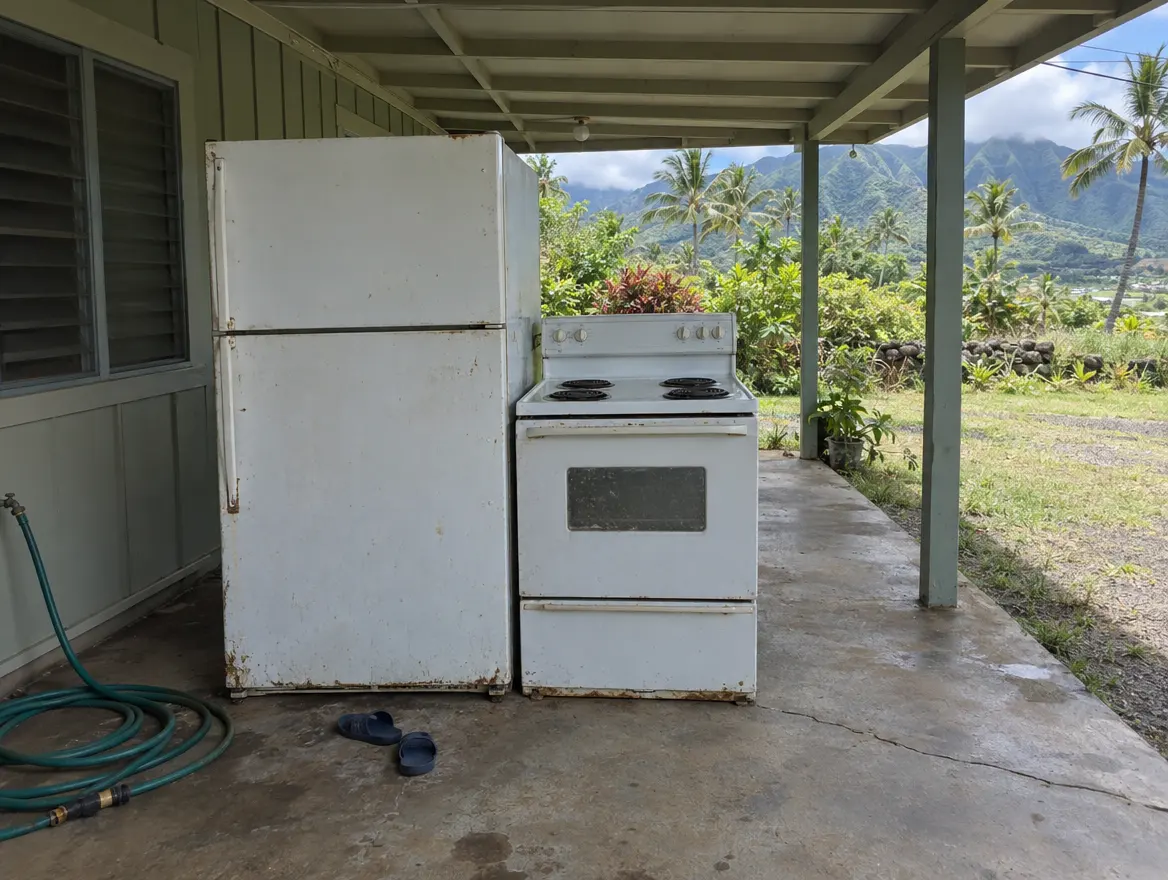
Start in the garage or the shed. Nothing in there will make you cry. Every Maui garage has a box that hasn't been opened since before the Superferry, and you can let it go without a ceremony.
Do the big things next. Extra beds, the second dining set, the exercise bike that became a coat rack. Big things free up the most room, and room is what makes the rest feel possible.
Tell your family what you're doing. She says to tell loved ones and friends, because they may help, take things, and move what you can't move alone (Time).
Hand things on with the story. Invite a grandchild over, tell them where the thing came from, and have bags ready so it leaves with them that day (Time).
Photos and letters go last. Start there and you'll be on the floor with one album at 4pm, and nothing will have left the house (The New York Times, summing up the book).
It's slow on purpose. She warns that downsizing a home takes time (Time), and that's the good news. A shelf a week still finishes the house.
Where to donate on Maui when you are clearing a house
Three places take most of what a house holds, and each one takes a different pile. Match the thing to the place and almost all of it is free. All three are drop-off first, so sort into three boxes as you go.
| Place | Takes | How |
|---|---|---|
| Friends of the Library | Books, DVDs, CDs, records, puzzles, board games (MFOL) | Drop off at any of its three stores during open hours (store hours) |
| Goodwill | Clothes, shoes, kitchen things, linens, artwork, jewelry, small electronics (Goodwill Hawaii) | Two drop-offs in Kahului, one in Kīhei, 9am to 5pm daily. No home pickup (Goodwill FAQ) |
| Habitat ReStore | Furniture, tools, garden gear, cabinets, light fixtures, home decor (Habitat Maui) | Wailuku. Send photos first. Pickup is $10 and curbside only (Habitat FAQ) |
The ReStore pickup has one rule that matters a lot for kūpuna. Its people can't come inside the house. The piece has to be outside or in the garage, on ground level, within 25 feet of the curb (Habitat Maui).
So the koa dresser in the upstairs bedroom needs a nephew before it needs a charity. Each part of the island gets one pickup day a week, and our furniture donation guide lists them.
West Side families have a longer drive. The Friends of the Library has no store on the West Side right now (MFOL), and Goodwill lists no drop-off in West Maui (Goodwill Hawaii). Save the boxes for a town day.
What charities on Maui will not take
Every charity has a no list, and it reads like the back bedroom of a house someone has lived in for forty years. Know it before you load the car.
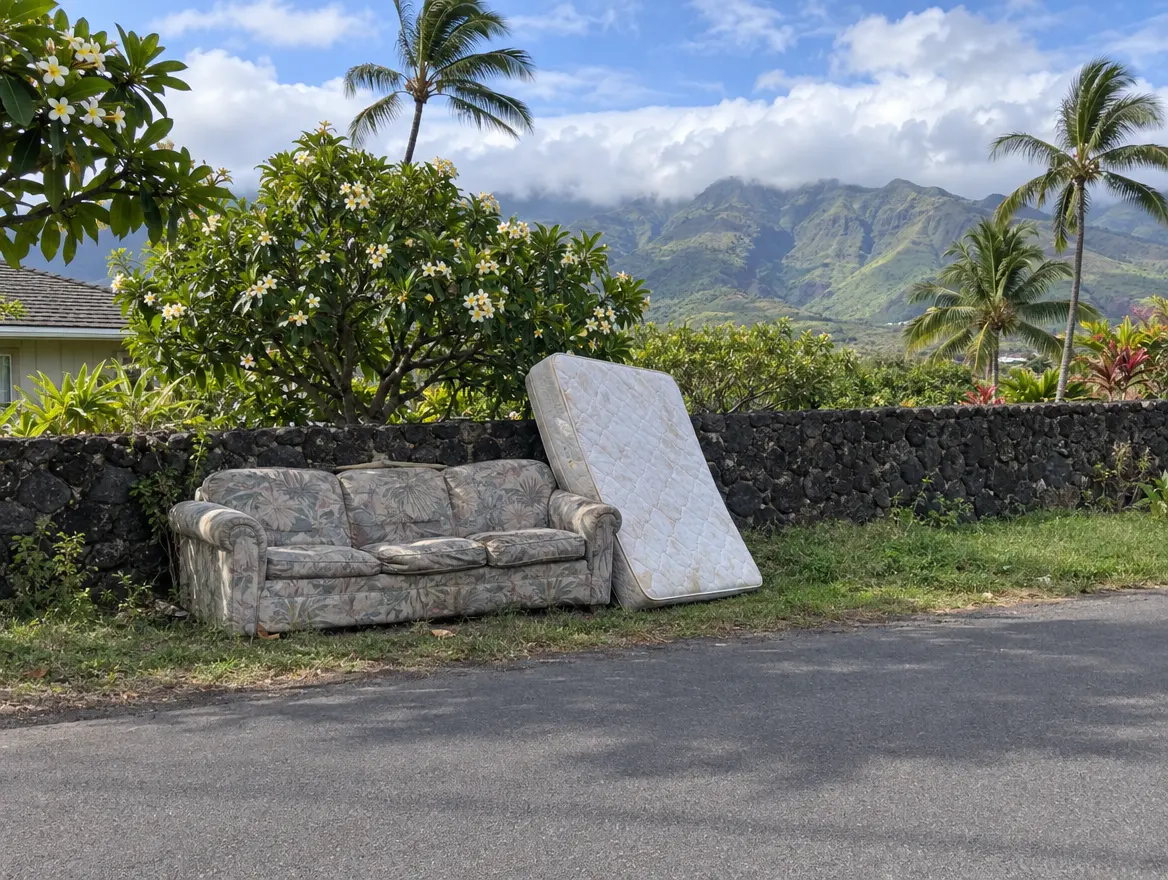
Mattresses and box springs. Both the ReStore and Goodwill refuse them (Habitat Maui, Goodwill Hawaii).
Pressed wood furniture and sleeper sofas. The ReStore says no to particle board, sleeper sofas, headboards and footboards (Habitat Maui).
Big appliances, TVs, computers and exercise machines. Refused by both. The county takes them, and our appliance guide and our electronics guide say where.
Walkers, wheelchairs and crutches. The ReStore lists all three as exclusions (Habitat Maui). We found no Maui charity page that takes them, so ask the Office on Aging who can use them.
Encyclopedia sets and VHS tapes. The Friends of the Library can't use either, or moldy books (MFOL). Goodwill refuses encyclopedias too (Goodwill Hawaii).
Paint and chemicals. Refused by both, and we don't haul them either.
A moment for the encyclopedias. Somebody paid real money for that set in 1987. Neither the library stores nor Goodwill wants it now, so it's the landfill pile. Magnusson herself wrote that a trip to the dump can feel wonderful (Time).
Old medicine and the papers
Old medicine goes in a police station drop box, never down the toilet. The State lists boxes at the Wailuku, Kīhei, Lahaina and Hāna stations (Hawaii Department of Health). Maui police told Maui Now in October 2026 that the boxes are open around the clock and drop-offs are anonymous (Maui Now).
The boxes don't take needles, inhalers, aerosol cans or thermometers (the State flyer).
For everything else in the house, the publisher's own summary of the book splits it like this (Scribner). I'd add one Maui line to the right-hand column: the third rice cooker.
| Keep | Let go |
|---|---|
| Photos | Clothes nobody wears |
| Love letters | Gifts you never wanted |
| A few of the kids' art projects | More plates than you'd ever use |
Papers are the slow part. We looked for a free shred day on Maui with a date on it and didn't find one, so it's a home shredder or a question for your bank. Before you shred, the Office on Aging points to a free Elder Law Hawaii Handbook that covers estate planning and powers of attorney (Maui County Office on Aging).
Doing it with your parents, and who helps kūpuna on Maui
If you're the adult child, your job is to carry and to listen, not to decide. Magnusson's point is that many grown kids don't want to talk about death with their parents, and the sorting gives you a way in (Time). You come for the garage. You stay for the story about the fishing reels.
A few things that keep it kind:
Ask what they want to happen to it. Then do that, even when you'd have picked different.
Take what you're offered, or say no out loud. A polite maybe is how the china ends up in your own garage for the next thirty years.
Do the lifting they can't. No charity on the list above comes inside for the heavy pieces.
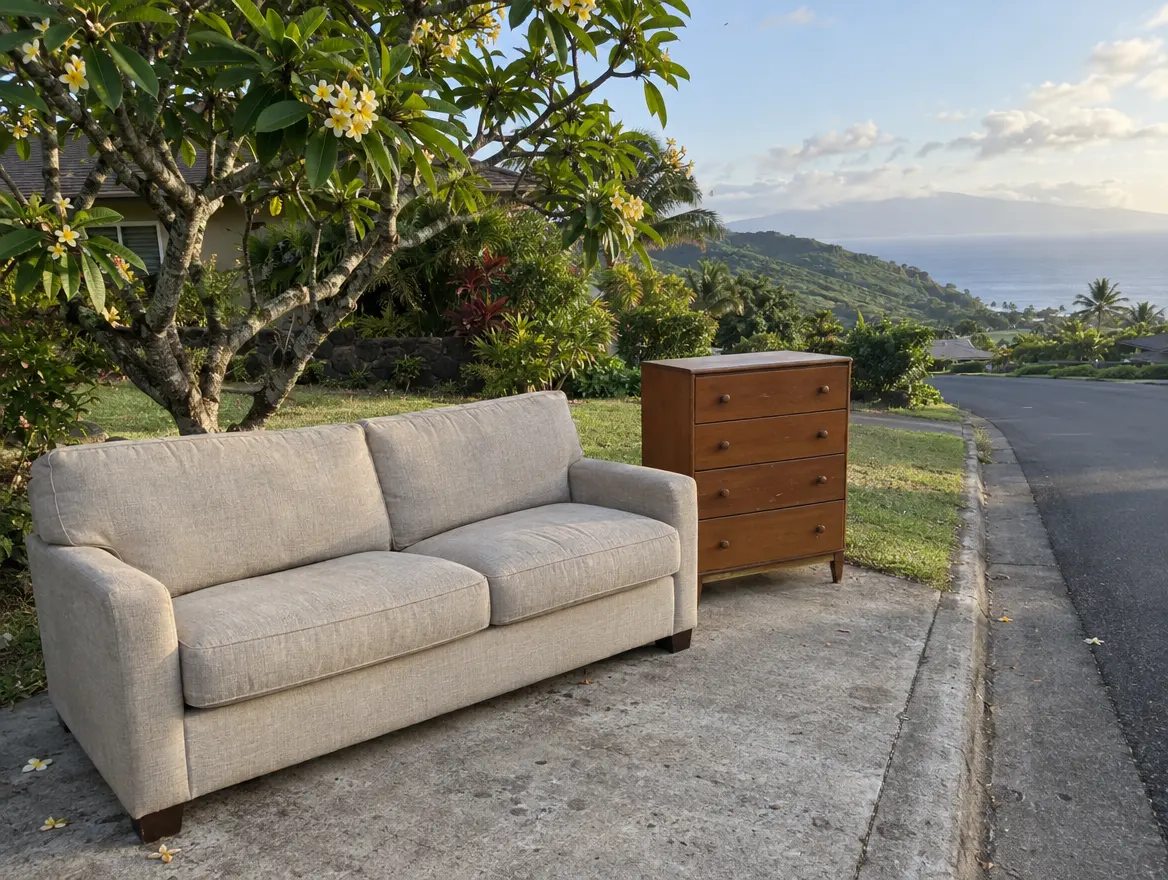
For help beyond the family, call the Maui County Office on Aging at (808) 270-7774 (Office on Aging). It can talk through housing choices like senior apartments and assisted living, and it lists services like meals, rides and light housework (its services page). Its pages list no help clearing a house. The sorting stays with the family.
When does a haul make sense?
A haul makes sense at the very end, once the giving is done and what's left is the pile nobody takes. That's the mattresses, the pressed wood, the old fridge and thirty years of garage. You can run it to the Central Maui Landfill yourself for $5 a load, and the Olowalu center on the West Side is free for residents, Monday to Saturday, 8am to 2:30pm (Maui County).
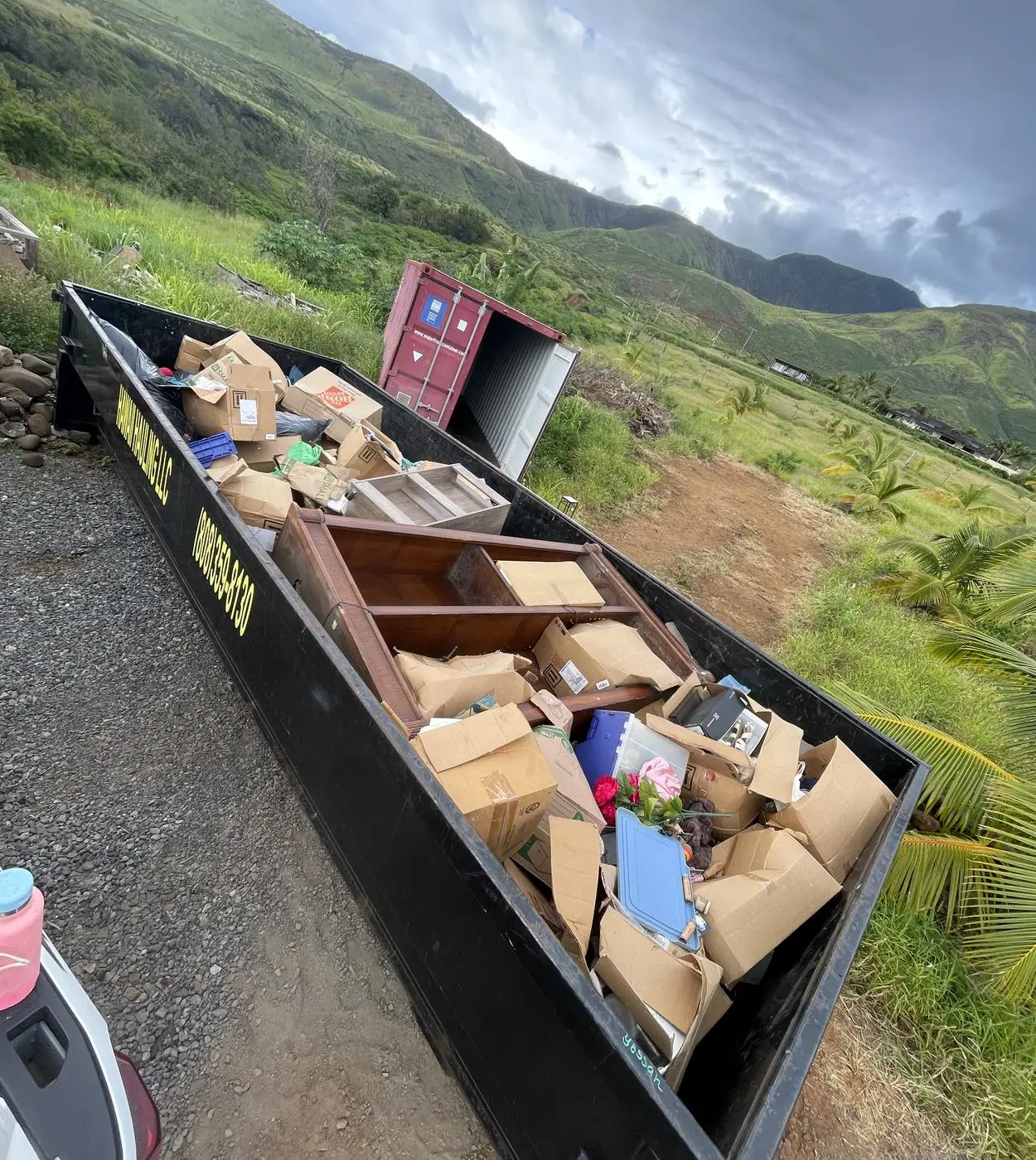
Or you text us a photo. We load everything, make the separate stops for the appliances and the TVs, and pay the landfill. A full cleanout where we load everything usually runs $1,500 to $2,500, and we confirm the price on site before we lift anything.
You don't need us for the slow part. Honestly, please don't call us first. If we show up before the grandkids have picked through the fishing gear, somebody's going to be mad at you, and a little bit at us.
One load at a time works too. A small dump run starts at $300, so the garage can go this month and the back bedroom next year. What junk removal costs on Maui has every price we publish.
What we see when a family clears a house
A few plain things from the hauling end of this job.
- What the charities refuse is what's left to haul. Mattresses, box springs, pressed wood and old appliances are what the charities refuse, so they're what's left at the end. Plan for them from the start and nothing surprises you.
- The order saves money. Everything a family member or a charity takes is something you don't pay to haul. Give first, then call.
- Send photos early. A photo of each room gets you a price by text. We confirm it on site before we load, and if the pile is bigger than the photos showed, you hear the new price first.
- The landfill receipt goes on the invoice. You see what the dump charged, at cost.
Free estimate from a photo. Text it to (808) 359-8130.
Swedish death cleaning questions
Straight answers. Something missing? Call us.
What is Swedish death cleaning?
It's clearing out your own belongings while you're alive and well, so your family doesn't have to do it after you're gone. The Swedish word is döstädning. It comes from Margareta Magnusson's 2018 book, The Gentle Art of Swedish Death Cleaning.
Where do you start with Swedish death cleaning?
Start with storage areas, and leave photos and letters for last. The author's advice is to begin where things have been sitting forgotten for years. On Maui that's the garage, the carport or the shed.
Do I have to get rid of everything?
No. The book's own summary says to keep photographs, love letters and a few of your children's art projects. What goes is unworn clothes, unwanted gifts and more dishes than you'd ever use.
Where do I donate things on Maui when clearing a house?
Books go to the Maui Friends of the Library stores in Kahului, Kīhei and Puʻunēnē. Clothes and household goods go to Goodwill in Kahului and Kīhei. Good furniture and tools go to the Habitat for Humanity ReStore in Wailuku, which picks up at the curb for a $10 donation.
What will charities on Maui not take?
The ReStore and Goodwill both refuse mattresses, box springs, large appliances, TVs, computers, exercise machines and paint. The ReStore also refuses particle board furniture, sleeper sofas, walkers and wheelchairs. The Friends of the Library can't use encyclopedia sets or VHS tapes.
Is there help for seniors downsizing on Maui?
The Maui County Office on Aging, (808) 270-7774, helps older adults with housing options, meals, rides and light housework. Its pages list no help clearing a house. The sorting stays with the family, and the leftover pile goes to the landfill or a hauler.
Down to the pile nobody wants?
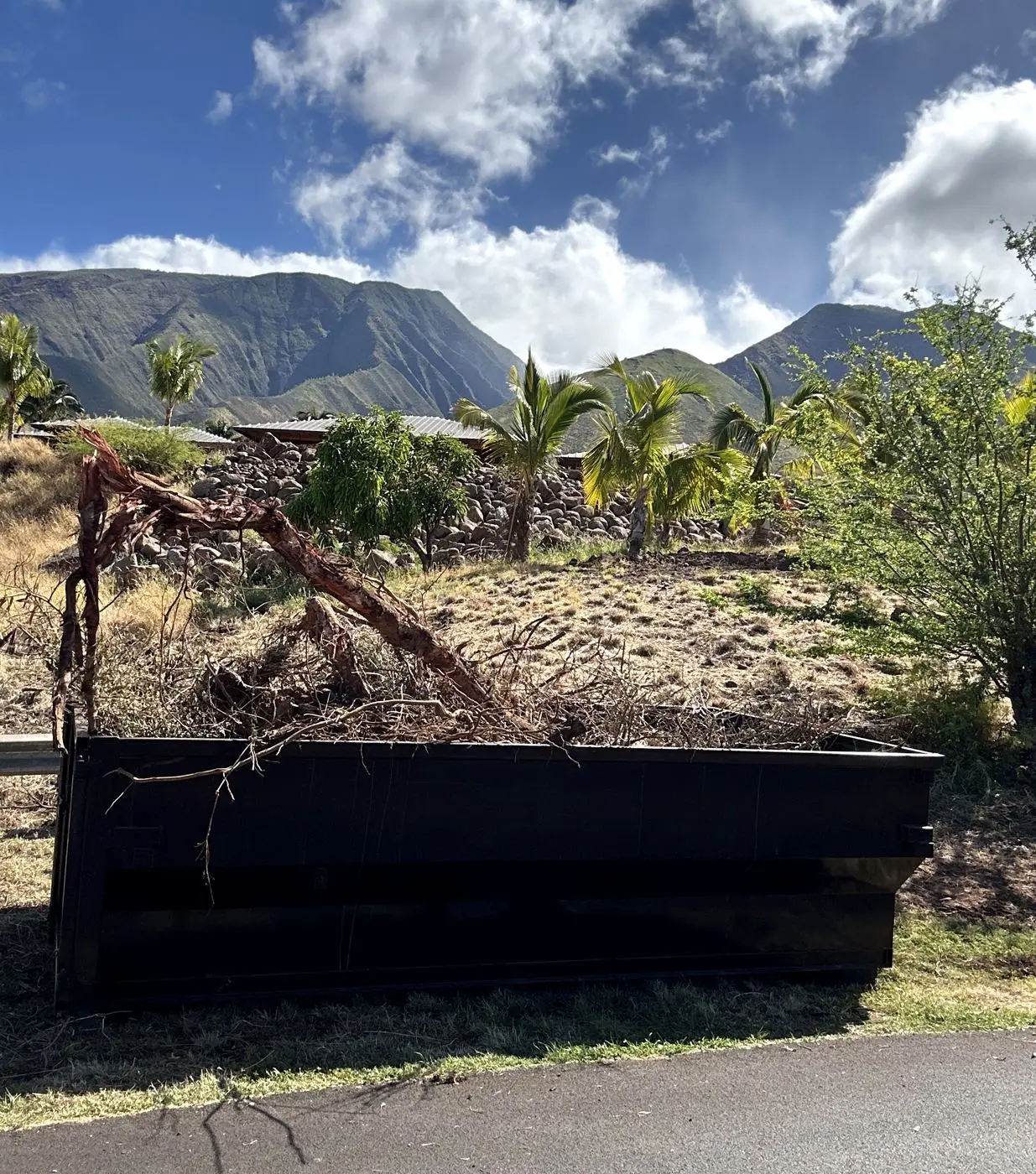
Text a photo of what's left and we'll text you a price. We load everything, make the stops and pay the landfill, the same day when you need it. A full cleanout usually runs $1,500 to $2,500. How our estate cleanouts work, or call (808) 359-8130.
Read this next: Where to donate furniture on Maui, and who picks it up